

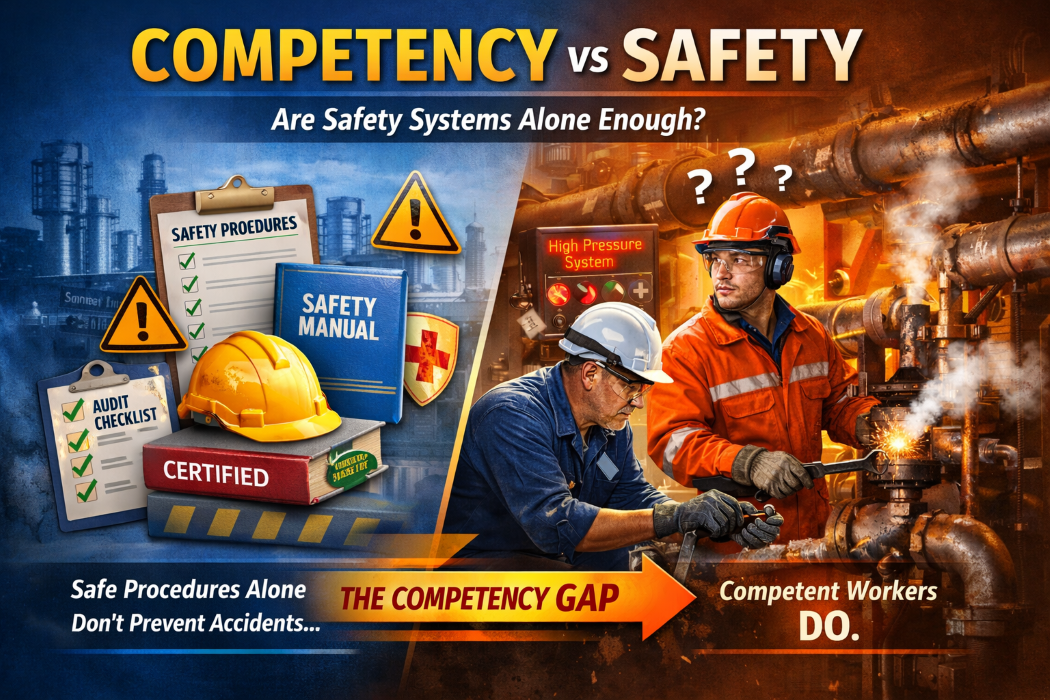
Why industries must rethink their approach?
Many organizations invest substantial resources in establishing HSE departments, implementing HSE policies, conducting audits, and ensuring compliance with regulatory standards. Yet, despite these efforts, incidents and near-misses continue to occur, often at the operational level.
This raises an important question: Are safety systems alone enough to ensure a safe workplace? The answer is no.
How are the accidents happening in industries? Most of the accidents happens during plant startup, shutdown, normal operations, or during maintenance time. Those who work in hazardous environments, operating, and maintaining high pressure and high temperature equipments are plant operators and maintenance technicians. Competency of these personnel is vital for safe operations.
The missing link in many organizations is not the absence of safety systems, but the lack of competency among the people expected to implement them—especially frontline workers like Plant Operators and Maintenance Technicians.
A well-managed Health, Safety, and Environment (HSE) department plays a crucial role in establishing a strong safety framework within an organization. It typically ensures the following:
These systems often appear robust and comprehensive. However, safety failures do not occur due to the absence of procedures, but rather because insufficient attention is given to developing and validating the competencies of the workforce involved.

 Enquire Now
 +91 99953 38853
 +968 99312 306
 +971 50 644 2346
 techdirector@tracezglobal.com

 Technical Programs