
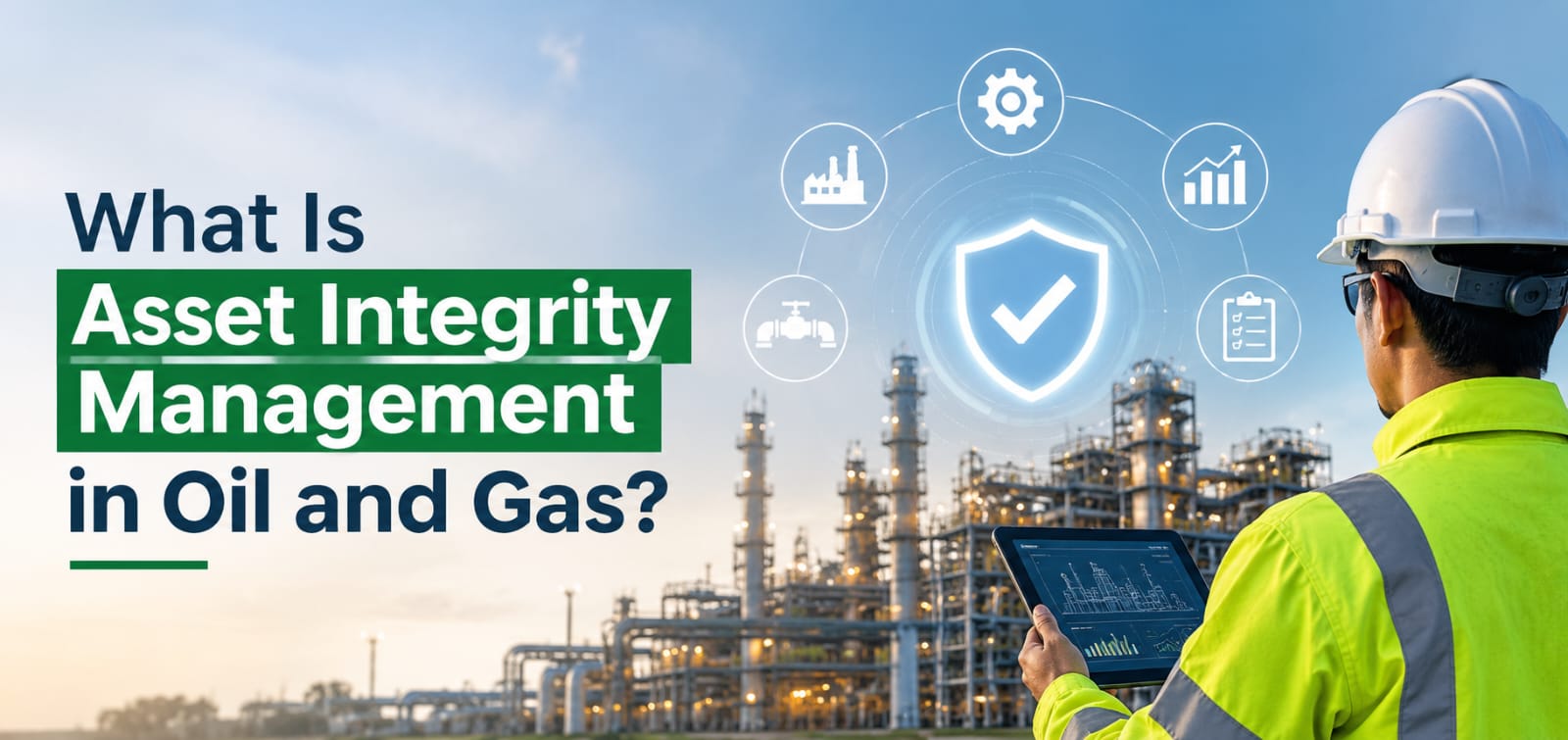
Asset integrity management (AIM) is the set of practices that keeps equipment such as pressure vessels, pipelines, storage tanks and rotating machinery fit for purpose, safe and reliable across its whole life. In oil and gas, it protects people, the environment and production by finding and fixing degradation before it becomes a failure.
Oil and gas facilities handle flammable fluids at high pressure and temperature. Corrosion, fatigue, ageing equipment and missed inspections are common causes of leaks, fires and unplanned shutdowns. A structured AIM programme turns those risks into planned, budgeted work instead of emergencies.
Regulators treat this seriously. The UK HSE, for example, runs a dedicated process integrity programme for offshore installations and publishes guidance on the ageing and life extension of offshore installations. Operators in India, the UAE and Oman face similar expectations from their own regulators and from the companies they work for.
|
Standard |
What it covers |
|---|---|
|
Requirements for an asset management system |
|
|
API 580 and API 581 |
Risk-based inspection |
|
API 510, API 570 and API 653 |
In-service inspection of pressure vessels, piping and storage tanks |
|
IEC 61511 |
Functional safety of safety instrumented systems (SIL) |
If your organisation wants to build or audit an asset management system, TRACEZ offers an ISO 55001 asset management lead implementer programme. For safety instrumented systems, see our functional safety and SIL management programme.
What is the difference between asset integrity and asset management? Asset integrity focuses on keeping equipment safe and fit for purpose. Asset management is broader and also covers cost, performance and lifecycle value.
Who is responsible for asset integrity? The operator owns it. Integrity engineers, inspectors, maintenance and operations teams carry out the work.
How often should equipment be inspected? Intervals come from the risk ranking and the applicable code, not from a fixed calendar.
What skills does an asset integrity team need? Risk assessment, inspection and corrosion knowledge, reliability engineering and management of change. Our asset integrity management training for oil and gas industries covers these skills. For maintenance planning, see maintenance, reliability and asset management best practices.
TRACEZ helps technical teams in India, the UAE and Oman build integrity, reliability and safety competence. Explore our technical programmes, or talk to our team about training for your sit

 Enquire Now
 +91 99953 38853
 +968 99312 306
 +971 50 644 2346
 techdirector@tracezglobal.com

 Technical Programs